Commercial cause & origin leak investigation
Make sense of unexplained moisture.
Trace recurring dampness and mystery leaks across commercial spaces. Share building records and coordinate access for a focused cause and origin investigation.
Request service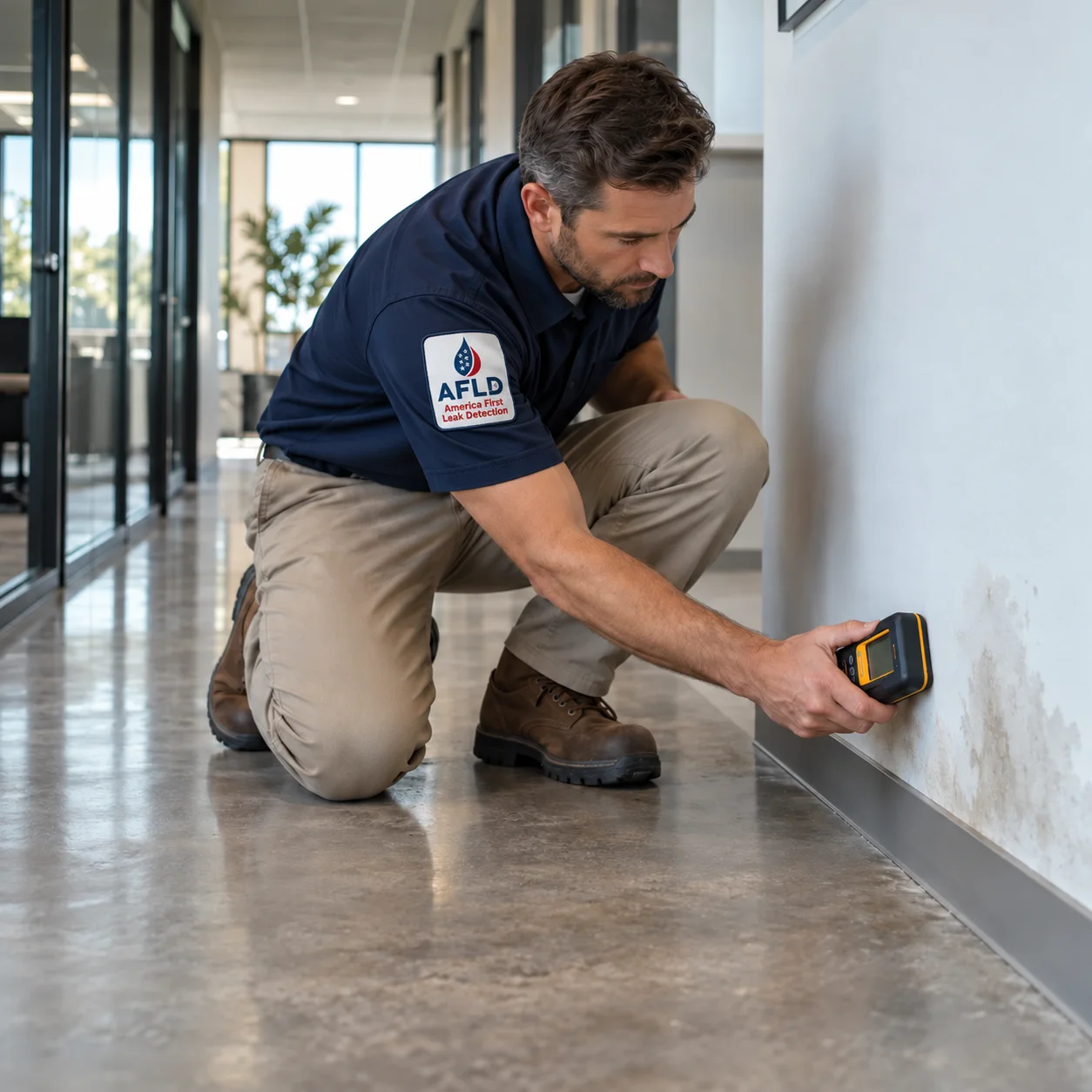
A closer look
Understand the problem.
Plan the next step.
A damp corridor or affected suite does not necessarily identify the source of a commercial leak. Water can move between floors and through concealed materials. A cause and origin investigation considers shared plumbing, external water entry and building conditions alongside the reported moisture pattern.
Building the property timeline
Include affected units, relevant dates and whether symptoms coincide with rainfall or building operations. Maintenance records and previous repairs can help explain the pattern. Access to neighboring or shared spaces may be needed to follow the evidence.
Testing the possible sources
Moisture readings and thermal observations help focus further investigation where appropriate. Each finding is considered alongside the building layout and materials. The scope may need to distinguish plumbing concerns from roof-related intrusion or condensation.
Documenting the next step
Confirm the information needed by the property manager, maintenance team or referral contact. Discuss access to concealed areas before work proceeds. Findings support the next investigation or repair decision; insurance coverage and claim decisions remain with the insurer.
Before your appointment
A few helpful answers.
Have a different question? Include it with your service request.
Frequently asked questionsWill finding the leak damage my property?
The investigation starts with methods that aim to limit disruption, such as acoustic listening and moisture measurements. Some situations need access to concealed areas. Any proposed access should be discussed with you before work proceeds.
Can you investigate a pool that keeps losing water?
Pool investigations can consider the shell, fittings, and connected plumbing. A bucket test can help compare pool water loss with evaporation before an appointment.
How should I prepare for a visit?
Note when you first noticed the problem, gather recent water-use records if available, and identify accessible shutoff valves. Share any access restrictions and keep the affected area accessible.
What happens after the leak investigation?
You receive an explanation of the observations and the recommended next step. Detection and repair are different scopes of work; confirm what is included when the service is arranged.